
What Skipping This Costs You
A garage door that limps through hurricane season on a half-rusted spring or a sensor that's been slightly out of alignment since August doesn't fix itself once the storms stop. It gets worse quietly, then fails loudly — usually when you're loading the car for a holiday trip or when a seasonal resident finally opens the door after months away and the opener grinds, stalls, or won't budge. A spring that snaps costs far more as an emergency call than it would have as a scheduled replacement, and a door that won't close all the way is an open invitation while your house sits empty. The week or two between now and when cooler, drier weather sets in is the cheapest time all year to catch these problems.
What Late Hurricane Season Leaves Behind
Hurricane season doesn't officially end until November 30, so any wind, rain, or pressure stress your door took from a late-season system is still fresh. Even if nothing hit directly, wind-load rated doors can develop small issues after repeated flexing: hairline cracks near hinges, bent top sections, or track brackets that pulled slightly loose from the frame. These aren't always visible from inside the garage with the door down.
- Open and close the door slowly while watching the tracks for wobble or gaps between the rollers and the rail.
- Check the top and bottom panels for warping, especially if the door faced direct wind during a storm.
- Look at the weather seal along the bottom edge — storm debris and standing water can tear or compress it, which you'll notice as light coming through at the floor line.
Why Cooler Nights Expose Problems Summer Hid
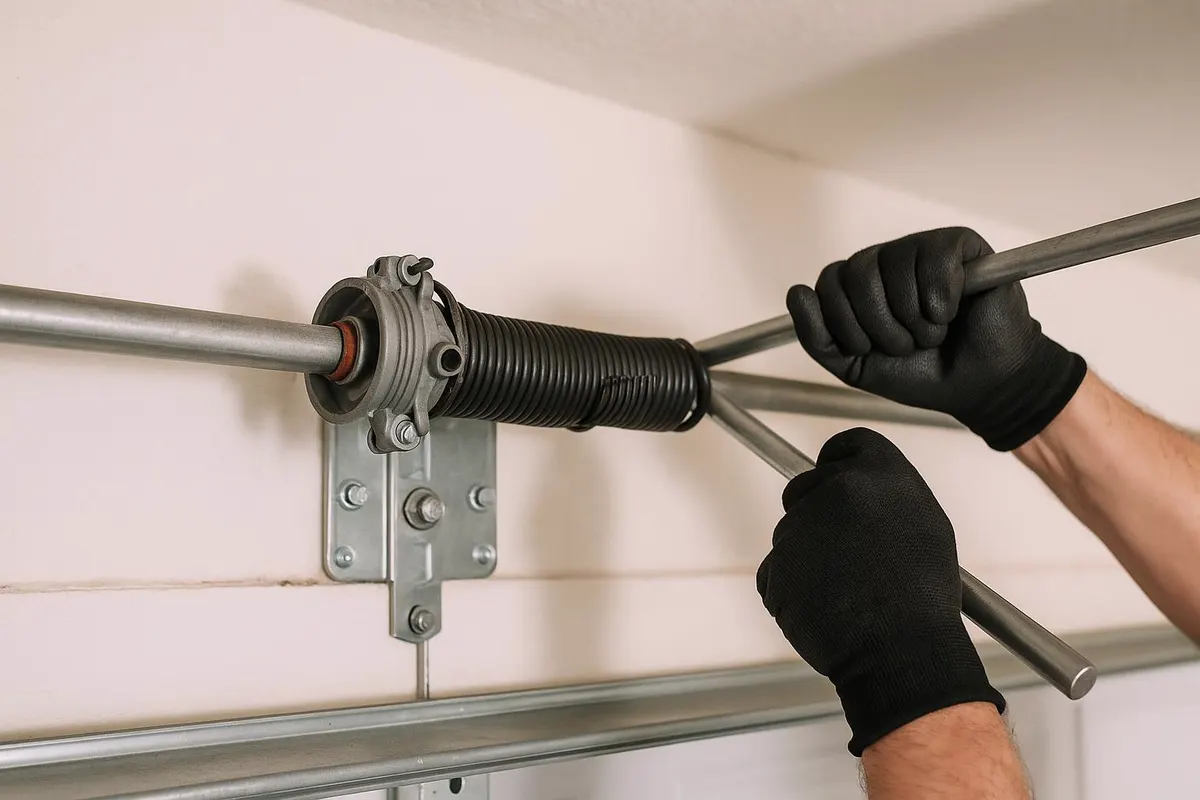
Naples doesn't get cold, but overnight lows dropping into the 50s and low 60s still matter here. Metal springs, tracks, and cables contract slightly in cooler temperatures after months of summer heat expansion. A door that felt fine in August can suddenly feel heavier to lift by hand, hesitate partway through its cycle, or make a new popping or grinding sound as parts settle into their cooler-season tension. This is the time of year torsion springs that were already near the end of their lifespan tend to show it — not because the cold caused the wear, but because the slight contraction is often what reveals a spring that was already fatigued from the humidity and heat cycles of summer.
If you notice the door is harder to open manually, or it no longer stays halfway up when disconnected from the opener, that's a spring tension issue worth having checked before it fails outright.
Dry Season Shrinkage and Your Weatherstripping
As humidity drops through the dry season, wood and composite door panels that absorbed moisture all summer start to shrink back. That can leave small gaps around panel seams or along the sides where weatherstripping was compressed to fit a swollen door. Those gaps let in dust, insects, and afternoon shower runoff that's still common into November. Run a hand along the seals on both sides and across the top when the door is closed; if you feel daylight or a draft, the seal needs adjusting or replacing before the gap widens further.
This is also a good window to address any rust that formed on hinges, rollers, or the bottom bracket during the humid months. Rust spreads faster once it starts, and treating it now, while the metal is drier and more receptive to lubricant, is far easier than dealing with a seized roller later.
Getting the Door Ready for Snowbird Season
October and November are when seasonal residents start returning and garages that sat mostly idle all summer go back into daily use. A door that's been opened only a handful of times in months is a good candidate for a few surprises: dead opener remote batteries, a safety sensor that got bumped out of alignment by a stored bike or bin, or a chain drive that's gone dry and noisy from disuse. Before the garage goes back into regular rotation:
- Test the auto-reverse safety feature by placing a block of wood in the door's path and confirming it reverses on contact.
- Replace opener remote and keypad batteries rather than waiting for them to die mid-use.
- Lubricate rollers, hinges, and the opener chain or screw drive with a garage-door-specific lubricant, not household oil, which attracts grit.
- Check that the photo-eye sensors near the floor are clean, aligned, and not nudged out of position from summer storage shuffling.
A Quick Pre-Winter Walkthrough
- Inspect tracks, rollers, and hinges for rust, bending, or looseness.
- Test spring balance by disconnecting the opener and lifting the door by hand — it should hold at waist height.
- Check weatherstripping on the bottom and sides for gaps or tears.
- Clean and test photo-eye sensors and the auto-reverse function.
- Lubricate moving metal parts and tighten any visible loose hardware.
When to Call Naples Garage & Gate
If the door feels unusually heavy, won't stay balanced when lifted by hand, or you spot rust creeping into the spring coils, that's a job for a technician rather than a DIY fix — springs under tension are dangerous to handle without the right tools. Naples Garage & Gate handles spring replacement and garage door maintenance visits that cover the full inspection above: tracks, rollers, cables, opener function, and weather seals, so small issues get caught before they turn into a failed door during a storm or while you're away.
If your garage or gate needs a once-over before the season shifts, call Naples Garage & Gate today and get it handled before winter travel starts.